20. The Legend of Zelda: Echoes of Wisdom (2024)
- Final score: 19 points
- Total placements: 2 lists
- Highest placement: #10, Nick
Schnei writes:
Inventive concepts and some clever dungeon designs, though once you figure out the gameplay elements, it gets a bit predictable. I’m very pleased that they let you truly wander the overworld at your own peril, and you can really do quite a lot before the plot hems you in at any given point. But ultimately there’s not much to raise this game up in the Zelda pantheon… I’d say that I appreciate this game more than I actually like it.
Casey writes:
Echoes of Wisdom is the 20th entry in what Wikipedia considers to be the “main series” of the Legend of Zelda franchise, a somewhat dubious claim given the inclusion of games like The Legend of Zelda: Phantom Hourglass but a remarkable one when you also know that it’s the first one where you get to play as Zelda, the person the series is, you know, the Legend Of.
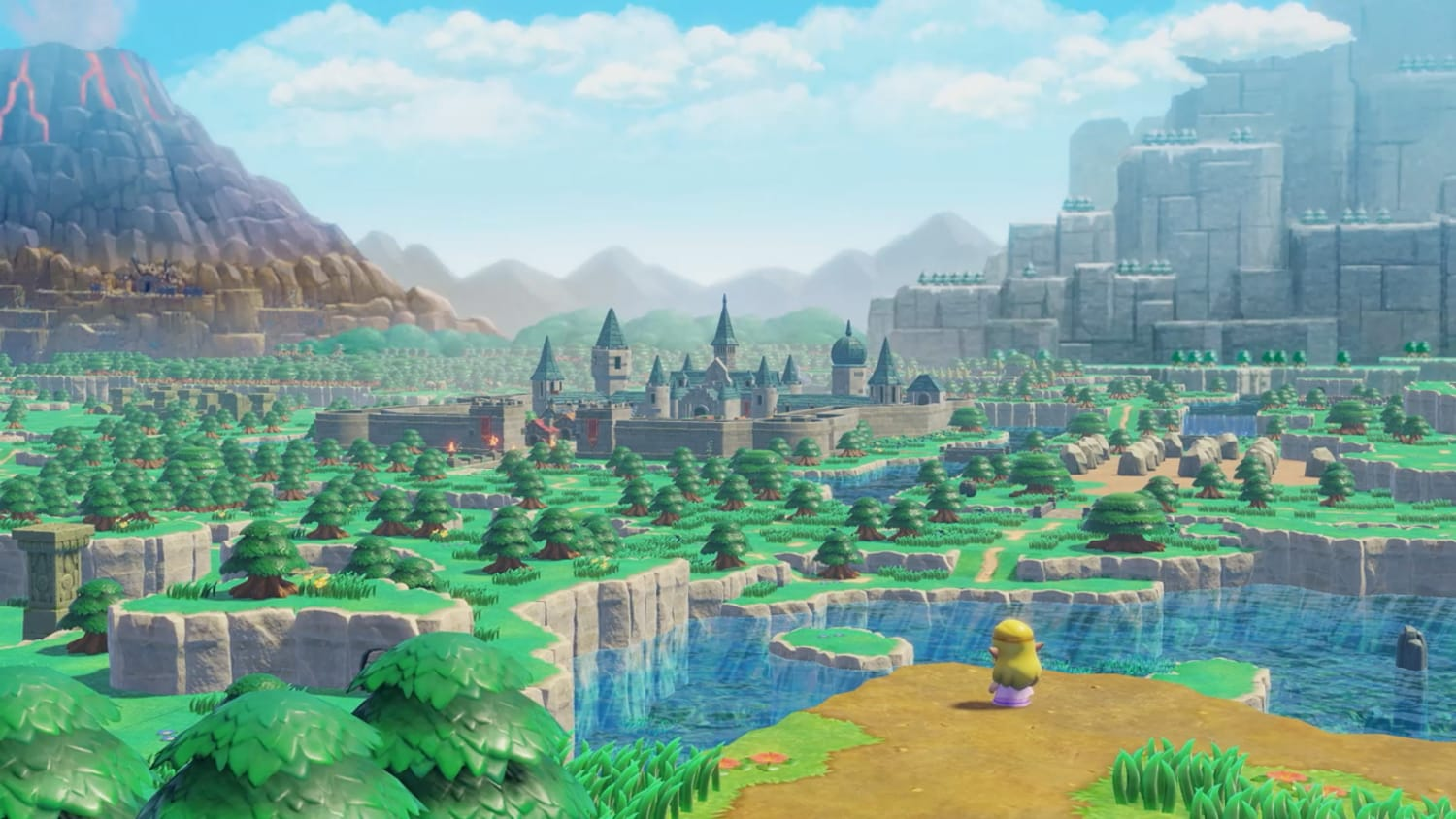
The game runs on an updated version of the diagonal-down view engine that powered the Switch remake of Link’s Awakening, merging into it a collection of HUD elements for inventory/spell management that feel like they were ported directly over from the previous year’s Tears of the Kingdom, a merger of in-house style that feels somehow beautiful and gives me hope that Nintendo will spit out a ton of 7/10 Zelda games, maybe featuring all manner of increasingly unlikely protagonists, using this unique combination of influences. It’s not just the HUD that seems to be merging the identity of the series, either–the map/primary areas you go to and who you find there, the simplified “cooking” system in the form of the smoothie crafting shops… the whole thing is a fascinating case study in solidifying a brand identity on many levels.
The new “echo” object-summoning mechanic, while cool, is unfortunately sort of tiring to use in a varied way due to some weaknesses of the UI design and instead encourages spamming your 3-4 go-to choices. This means you kind of get what you put into the game similar to Breath of the Wild and Tears of the Kingdom, but with a lower ceiling of player expression. Still, it’s a treat for fans of the franchise and hopefully proof that, equipped with this engine, Nintendo can pump out 2D Zelda games more regularly and experiment with the franchise more in between its banner 3D titles.